
Aluminum vs Stainless Steel for CNC Machining | Which Material Is Better?
Compare aluminum vs stainless steel for CNC machining. Learn the differences in cost, strength, weight, corrosion resistance, and machining performance.
5/22/20266 min read
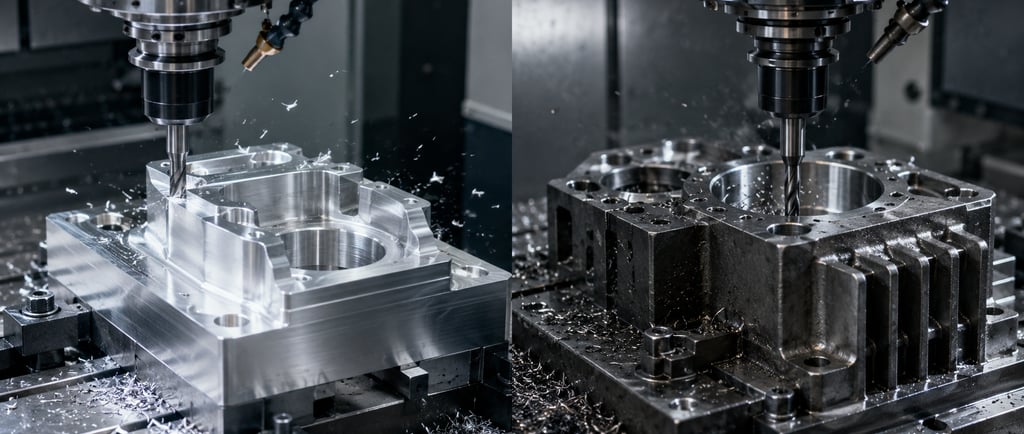
When designing a new product or sourcing custom parts, material selection is one of the most critical decisions you will make. It dictates not only the performance and lifespan of the final component but also the manufacturing cost and lead time. Among the myriad of materials available to engineers and product designers, two metals consistently dominate the manufacturing floor: aluminum and stainless steel.
Understanding the nuances of aluminum vs stainless steel cnc machining is essential for optimizing your project. Both metals offer distinct advantages, but they behave very differently under the cutting tool and in their final applications. Choosing the wrong material can lead to premature part failure, excessive tooling costs, or unnecessary weight in your final assembly.
In this comprehensive guide, we will break down the fundamental properties, key differences, and ideal applications for both materials, equipping you with the knowledge to make the right choice for your next CNC machining project.
What Is Aluminum in CNC Machining?
Aluminum is a non-ferrous metal renowned for its exceptional strength-to-weight ratio, excellent thermal and electrical conductivity, and outstanding machinability. In the realm of CNC machining, aluminum is arguably the most popular metal globally. Because it is relatively soft compared to ferrous metals, CNC machines can cut aluminum at extremely high spindle speeds and feed rates, removing material rapidly with minimal tool wear.
While pure aluminum is too soft for most industrial applications, it is alloyed with elements like zinc, copper, silicon, and magnesium to drastically improve its mechanical properties.
Common Aluminum Alloys in CNC Machining:
Aluminum 6061-T6: The industry standard. It offers an excellent balance of strength, weldability, and corrosion resistance, making it ideal for general-purpose machining.
Aluminum 7075-T6: Known as aerospace-grade aluminum. Alloyed with zinc, it boasts a tensile strength comparable to some steels, though it is more challenging to weld and less corrosion-resistant than 6061.
Aluminum 5052: Primarily used for sheet metal operations but occasionally machined. It offers superior corrosion resistance, particularly in marine environments.
What Is Stainless Steel in CNC Machining?
Stainless steel is an iron-based alloy containing a minimum of 10.5% chromium. This chromium content is the magic ingredient—it reacts with oxygen to form a passive, microscopic layer of chromium oxide on the metal's surface. This self-healing layer is what gives stainless steel its famous resistance to rust and corrosion.
In CNC machining, stainless steel is respected for its high tensile strength, durability, and ability to withstand extreme temperatures and harsh chemical environments. However, these same tough properties make it significantly more challenging and time-consuming to machine than aluminum.
Common Stainless Steel Alloys in CNC Machining:
Stainless Steel 304: The most common austenitic grade. It provides excellent corrosion resistance and is widely used in kitchen equipment, architectural paneling, and general industrial applications.
Stainless Steel 316: Contains added molybdenum, which significantly increases its resistance to chlorides (like salt water) and industrial solvents. It is the go-to grade for marine, medical, and chemical processing equipment.
Stainless Steel 17-4 PH: A martensitic, precipitation-hardening stainless steel. It offers a unique combination of high strength, good corrosion resistance, and the ability to be heat-treated to various hardness levels after machining.
Duplex Stainless Steel: Combines austenitic and ferritic structures, offering incredibly high yield strength and superior resistance to stress corrosion cracking, often used in offshore oil and gas platforms.
Aluminum vs Stainless Steel: Key Differences
To determine which material is better suited for your project, we must compare them across six critical engineering and commercial metrics.
1. Weight
If weight reduction is a primary goal, aluminum is the undisputed winner. Aluminum has a density of roughly 2.7 g/cm³, while stainless steel sits around 7.9 g/cm³. This means a component machined from stainless steel will be approximately three times heavier than the exact same part machined from aluminum. For industries like aerospace, automotive, and robotics—where every gram counts to improve fuel efficiency or payload capacity—aluminum is almost always the preferred choice.
2. Strength
When evaluating pure mechanical strength, stainless steel outperforms aluminum. It has a significantly higher yield strength, tensile strength, and hardness. Stainless steel can withstand heavy impacts, high continuous stress, and abrasive wear without deforming.
However, engineers must often consider the strength-to-weight ratio. High-performance aluminum alloys like 7075-T6 can rival the yield strength of lower-grade steels while remaining a fraction of the weight. Therefore, if you need maximum absolute strength and wear resistance, choose stainless steel. If you need a strong but lightweight part, choose an advanced aluminum alloy.
3. Corrosion Resistance
Both materials are highly corrosion-resistant, but they achieve this through different mechanisms and excel in different environments.
Stainless Steel: The inherent chromium oxide layer provides robust, through-and-through protection. Grades like 316 and Duplex can survive continuous exposure to saltwater, harsh acids, and extreme weather without degrading.
Aluminum: Forms a natural aluminum oxide layer that prevents further oxidation. However, raw aluminum can pit in harsh alkaline or acidic environments. To achieve maximum corrosion resistance, aluminum CNC parts typically require a secondary surface treatment, such as Type II or Type III (Hardcoat) Anodizing.
4. Machinability
Machinability directly impacts manufacturing lead times and costs. In the context of aluminum vs stainless steel cnc machining, aluminum is vastly superior.
Aluminum Machinability: It cuts smoothly, produces clean chips, and requires less cutting force. This allows CNC mills and lathes to run at maximum speeds, drastically reducing cycle times. Tool wear is minimal, meaning cutting inserts need replacing less often.
Stainless Steel Machinability: Stainless steel is tough, gummy, and prone to "work hardening"—meaning the material actually becomes harder as the cutting tool generates heat against it. To successfully machine stainless steel, machinists must use rigid setups, specialized carbide tooling, copious amounts of high-pressure coolant, and significantly slower feed rates.
5. Cost
When calculating the total cost of a CNC machined part, you must factor in both raw material costs and machining time.
Raw Material: Pound for pound, standard aluminum (like 6061) is generally cheaper than standard stainless steel (like 304).
Machine Time: Because aluminum can be machined three to four times faster than stainless steel, the hourly machine costs are drastically lower.
Therefore, aluminum is almost always the more cost-effective choice for custom manufacturing, assuming it meets your mechanical requirements.
6. Surface Finish
Both metals can achieve exceptionally tight tolerances and smooth surface finishes right off the CNC machine, but their post-machining treatment options differ.
Aluminum: Responds beautifully to anodizing, which not only hardens the surface but allows the metal to be dyed in almost any custom color (black, red, blue, gold). It can also be bead blasted for a matte finish or powder-coated.
Stainless Steel: Usually left bare because its natural finish is highly attractive and inherently protected. It can be electropolished for a mirror-like shine, brushed for a sanitary finish, or passivated to remove free iron from the surface and enhance its anti-rust properties.
Best Applications for Aluminum CNC Parts
Because of its light weight, excellent machinability, and thermal conductivity, aluminum is the material of choice for:
Aerospace Components: Aircraft brackets, drone chassis, and interior structural frames.
Automotive Parts: Engine blocks, heat sinks, transmission housings, and custom aftermarket car parts.
Consumer Electronics: Laptop enclosures, smartphone chassis, and wearable device cases.
Robotics and Automation: End-of-arm tooling, robotic chassis, and lightweight conveyor components.
Thermal Management: Heat sinks for LED lighting and computer processors.
Best Applications for Stainless Steel CNC Parts
Stainless steel is reserved for applications where high strength, structural integrity under heat, or ultimate hygiene are non-negotiable. Common applications include:
Medical and Surgical: Orthopedic implants, surgical instruments, and MRI-compatible equipment (using non-magnetic grades).
Food and Beverage Processing: Conveyor components, mixing vats, and custom fittings that require frequent washdowns with harsh antibacterial chemicals.
Marine Engineering: Boat fittings, underwater housings, and offshore rigging hardware (specifically 316 and Duplex grades).
Oil, Gas, and Energy: High-pressure valves, pump housings, and pipeline fittings that must survive extreme subterranean or subsea environments.
Heavy Machinery: High-wear gears, heavy-duty fasteners, and load-bearing brackets.
Which Material Should You Choose?
Making the final decision between aluminum and stainless steel comes down to defining the primary constraints of your project. Here is a quick decision matrix:
Choose Aluminum if:
You need to keep the weight of your assembly as low as possible.
You are prototyping and need to keep machining costs and lead times to a minimum.
The part requires high thermal or electrical conductivity.
You want to apply custom colors via color anodizing.
The mechanical stress on the part is moderate.
Choose Stainless Steel if:
The part will be subjected to high mechanical stress, heavy loads, or abrasive wear.
The component must operate in extreme temperatures (high heat or cryogenic).
The part will be exposed to corrosive chemicals, saltwater, or strict sanitary washdown procedures.
You are manufacturing medical devices or food-grade equipment.
The part requires high weldability coupled with high structural integrity.
Conclusion
There is no definitive "better" material when it comes to aluminum vs stainless steel cnc machining; there is only the right material for your specific application. Aluminum offers the ultimate combination of machinability, cost-effectiveness, and lightweight performance, making it a versatile powerhouse for modern engineering. Stainless steel, while more expensive and challenging to machine, provides unmatched durability, strength, and environmental resistance that critical-failure applications demand.
By carefully evaluating your project's weight limits, strength requirements, operating environment, and budget, you can confidently select the material that will guarantee the success of your product.
Need Expert Advice on Your Next CNC Project?
Choosing the right material and executing high-precision machining requires an experienced manufacturing partner. At KENDORIC, we specialize in delivering top-tier custom CNC machining services for both aluminum and stainless steel components. Whether you need rapid prototyping, complex geometries, or high-volume production of challenging alloys like Duplex stainless steel, our engineering team is here to help you optimize your design and reduce costs.