Files
- 2D drawing
- 3D CAD / STEP file
- Drawing revision if applicable
Engineering-oriented CNC machining support
Review critical dimensions, functional fits, geometric tolerances, datum references, and inspection expectations before quotation, especially when drawings include tight or unclear tolerance requirements.
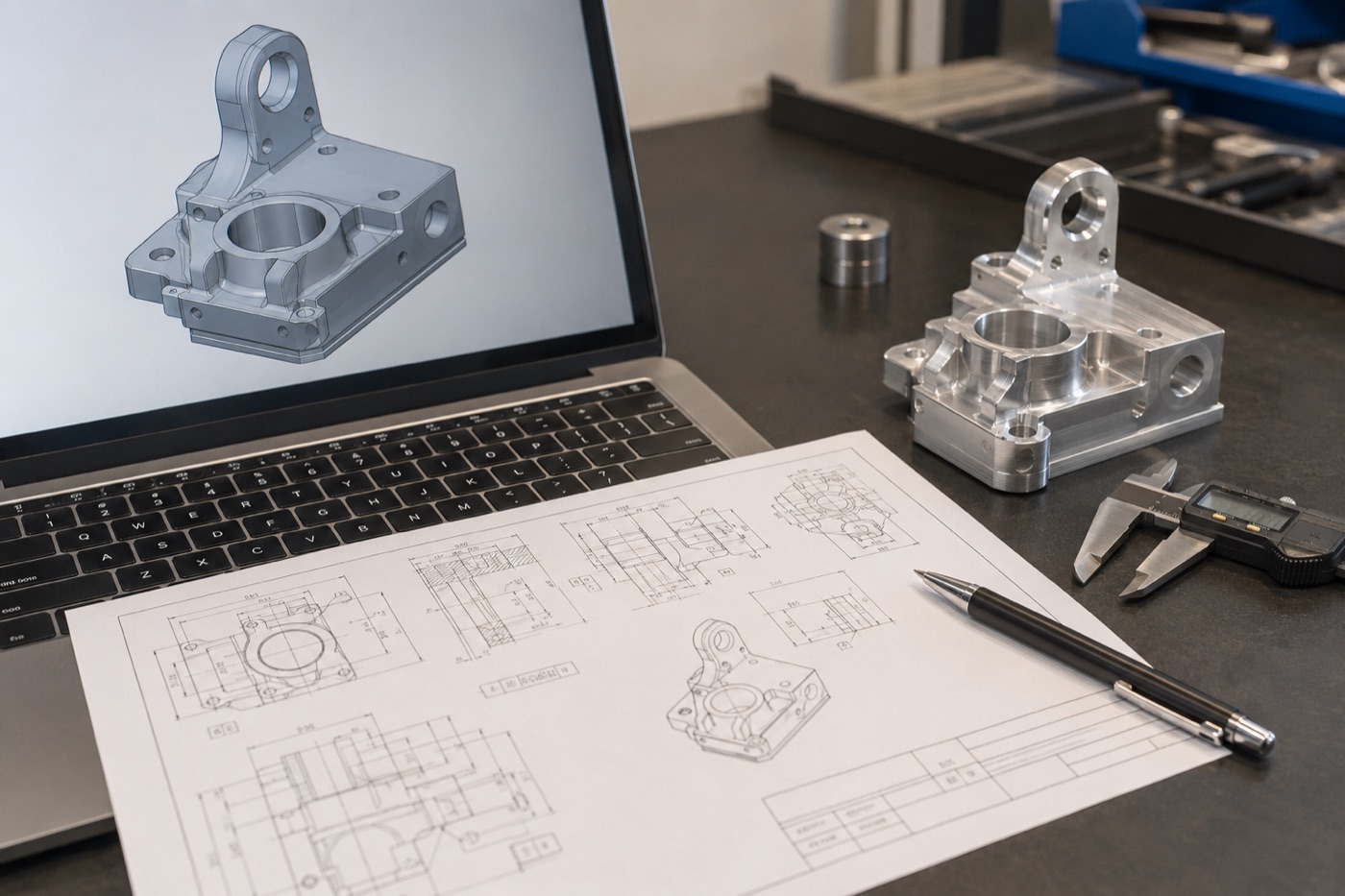
Tolerance service scope
Tolerance requirements affect manufacturability, machining time, inspection effort, cost, lead time, and quotation accuracy. KENDORIC helps buyers review drawings, CAD files, material choices, machining methods, finishing requirements, datum references, and inspection expectations before quotation. The goal is to identify which dimensions are function-critical and which can follow practical general tolerances.
Fits, bearing seats, sealing faces, datum surfaces, alignment features, and assembly-critical dimensions.
Flatness, parallelism, perpendicularity, concentricity, runout, hole position, and datum relationships.
Identify where tight tolerances are necessary and where standard machining tolerances may be sufficient.
Clarify whether calipers, micrometers, gauges, bore gauges, CMM-style inspection, or reports are required.
Drawing preparation
Use general tolerances for ordinary dimensions and specific callouts for functional features.
Define datum surfaces and measurement orientation when geometric tolerances or multi-setup features matter.
Mark bores, shafts, bearing seats, sealing faces, threads, and mating dimensions clearly.
State which dimensions need recorded inspection results instead of requiring reports for every feature.
RFQ checklist
| Review Item | Why It Matters | Buyer Action |
|---|---|---|
| Critical dimensions | Focuses machining and inspection on functional features | Mark dimensions that affect fit, alignment, sealing, or movement |
| Datum references | Controls how features are measured and related | Confirm datum surfaces and assembly orientation |
| Bore and shaft fits | Small changes can affect assembly performance | Provide mating part information or fit expectation if available |
| Flatness and parallelism | Important for mounting, sealing, and fixture parts | Identify functional faces and acceptable variation |
| Hole position | Affects assembly with bolts, pins, and mating plates | Mark critical hole patterns and related datums |
| Surface finish | Can affect sliding, sealing, appearance, or coating | Specify only where function or appearance requires it |
| Post-finishing dimensions | Coatings or heat treatment can change final dimensions | State whether dimensions apply before or after finishing |
| Inspection requirements | Determines measuring method and report scope | Identify features that require recorded inspection results |
Manufacturing impact
Tight tolerances may require slower machining, better fixturing, extra setup control, or process changes.
Critical features may need micrometers, bore gauges, thread gauges, height gauges, or CMM-style inspection.
Thin walls, deep pockets, long shafts, small bores, coated surfaces, or heat-treated features may need early feasibility review.
Part behavior
Thin walls, deep pockets, large flat faces, and heavy material removal may affect stability.
Tool wear, heat control, surface finish, tight bores, and critical diameters may need closer review.
Runout, concentricity, OD/ID fits, shoulders, grooves, and bearing surfaces can drive inspection needs.
Flatness, hole position, datum faces, pockets, slots, and multi-setup features should be reviewed.
Measurement planning
Calipers, micrometers, height gauges, bore gauges, plug gauges, and thread gauges may be suitable for many features.
Useful when geometry, datum relationships, hole positions, profiles, or multi-feature relationships require closer review.
Inspection reports should focus on critical dimensions instead of recording every non-critical feature when not necessary.
Quotation inputs
Share your 2D drawings, 3D CAD files, material, quantity, critical dimensions, tolerance notes, surface finish, inspection requirements, and delivery details for review before quotation.
Get Tolerance Review Feedback