Files
- 2D drawing
- 3D CAD / STEP file
- Sample photos if available
Engineering-oriented CNC machining support
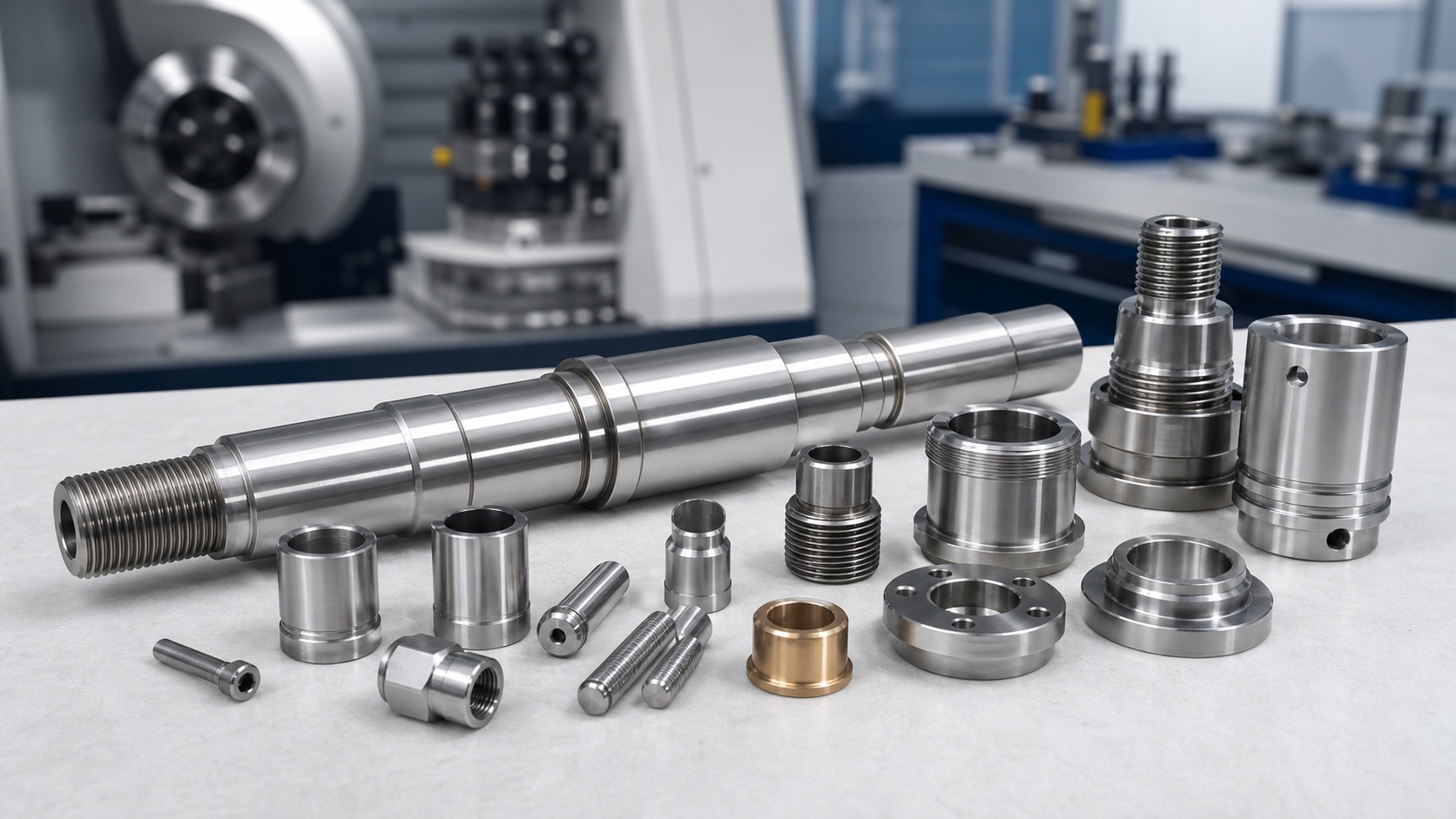
CNC turning support for shafts, sleeves, bushings, pins, fittings, and other round components, with diameter, bore, thread, fit, surface finish, and inspection details reviewed before quotation.
Turning service scope
KENDORIC supports CNC turning projects for overseas buyers who need shafts, sleeves, bushings, pins, fittings, spacers, collars, and other round components made from drawings or CAD files. Before quotation, we review diameter tolerances, bores, threads, grooves, runout, surface finish, material, secondary operations, and inspection requirements so unclear items can be clarified early.
Shafts, sleeves, bushings, pins, fittings, spacers, collars, and other round components.
ODs, IDs, shoulders, grooves, bores, fits, thread details, and mating surfaces.
Concentricity, runout, bearing fits, seal surfaces, and alignment-related features.
Surface roughness, thread gauges, bore inspection, chamfers, edge breaks, and report expectations.
Round components
CNC turning is suitable for cylindrical or rotational parts with outside diameters, bores, shoulders, grooves, tapers, threads, chamfers, and precision fit surfaces. Some turned parts may also require secondary milling, drilling, tapping, flats, cross holes, heat treatment, coating, or marking.
Round components with shoulders, fits, grooves, threads, and alignment surfaces.
Parts where inside diameter, outside diameter, wall thickness, and concentricity matter.
Components used for location, spacing, alignment, or controlled assembly fits.
Threaded or bored parts with sealing surfaces, grooves, and wrench features.
Turned components requiring flats, cross holes, slots, milling, drilling, or tapping.
Buyer reference
| Turned Part Type | Critical RFQ Details |
|---|---|
| Shafts | Bearing fits, runout, shoulder locations, threads, surface finish, and heat treatment if required. |
| Sleeves and bushings | Inside diameter, outside diameter, wall thickness, concentricity, and wear or fit requirements. |
| Pins and spacers | Diameter tolerance, length, chamfers, material, and whether the part is used for alignment. |
| Fittings and connectors | Thread standard, sealing surfaces, grooves, bores, and finish requirements. |
| Parts with secondary features | Cross holes, flats, slots, milled features, and secondary inspection points. |
Material options
Suitable for lightweight shafts, spacers, sleeves, fittings, and parts requiring good machinability or anodizing.
Used for corrosion-resistant or stronger turned parts, with closer review of machining time, surface finish, and inspection needs.
Suitable for mechanical shafts, pins, spacers, collars, and parts where strength, heat treatment, or cost balance matters.
Used for lightweight, low-friction, insulating, or wear-related turned components depending on function.
Dimensional review
OD/ID tolerances, bearing fits, seal fits, press fits, sliding fits, and mating components.
Relationships between bores, outside diameters, shoulders, and rotating or alignment features.
Thread standards, groove width/depth, shoulder locations, chamfers, and edge breaks.
Post-processing
Surface finish may be important for turned parts that slide, seal, rotate, or assemble with other components. Secondary operations such as cross drilling, milling flats, keyways, tapping, knurling, heat treatment, plating, coating, laser marking, or deburring should be included in the RFQ because they affect setup, cost, lead time, and inspection.
Quotation inputs
Share your 2D drawings, 3D CAD files, material, quantity, diameter tolerances, thread details, surface finish, inspection requirements, and delivery details for review before quotation.
Request a CNC Turning Quote